JAGUAR F-TYPE PROJECT 7 – THE SKETCH THAT BECAME A JAGUAR FOR COLLECTORS
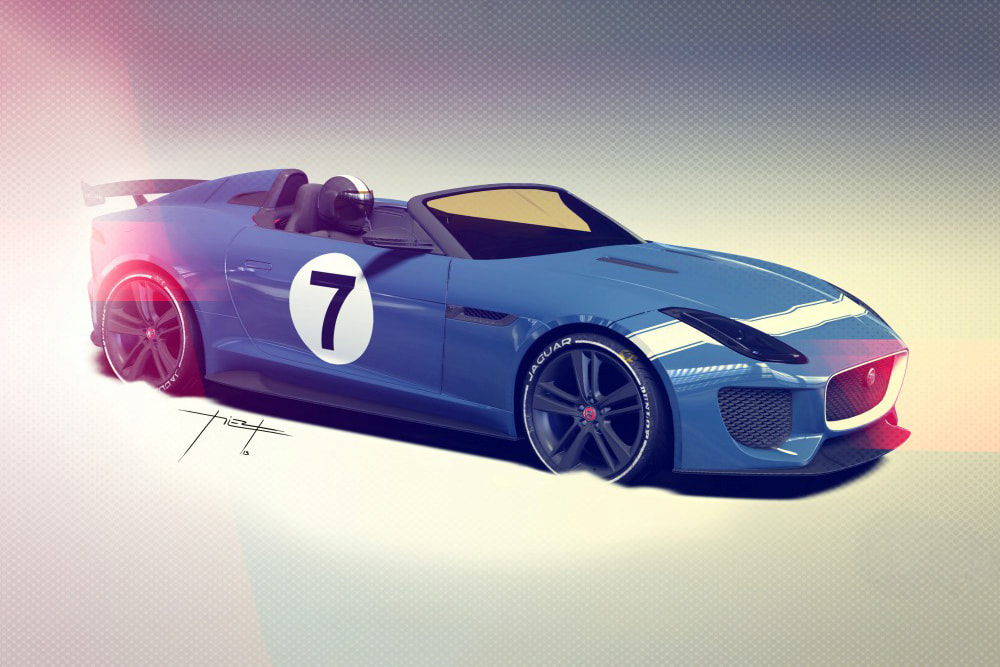
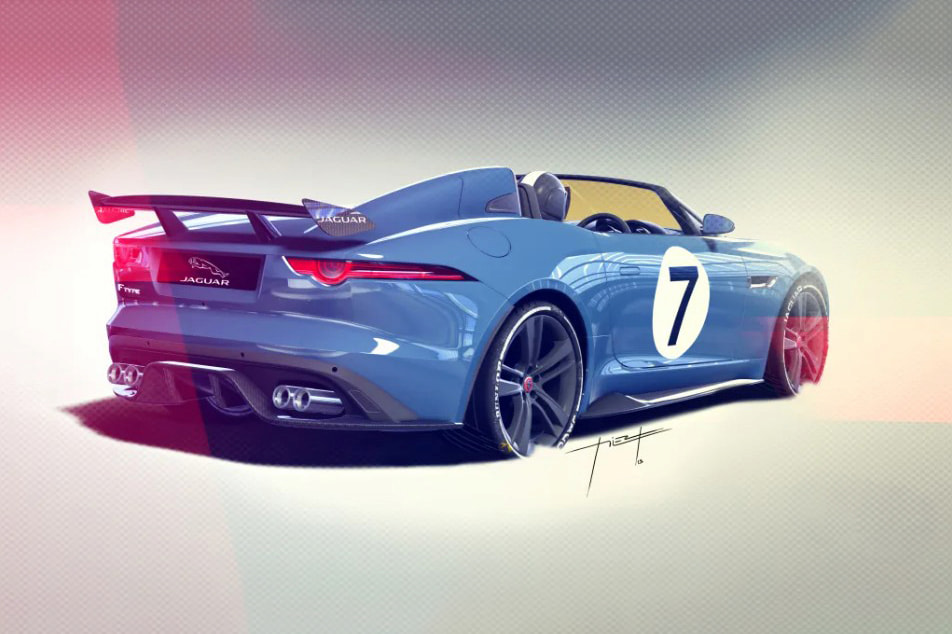
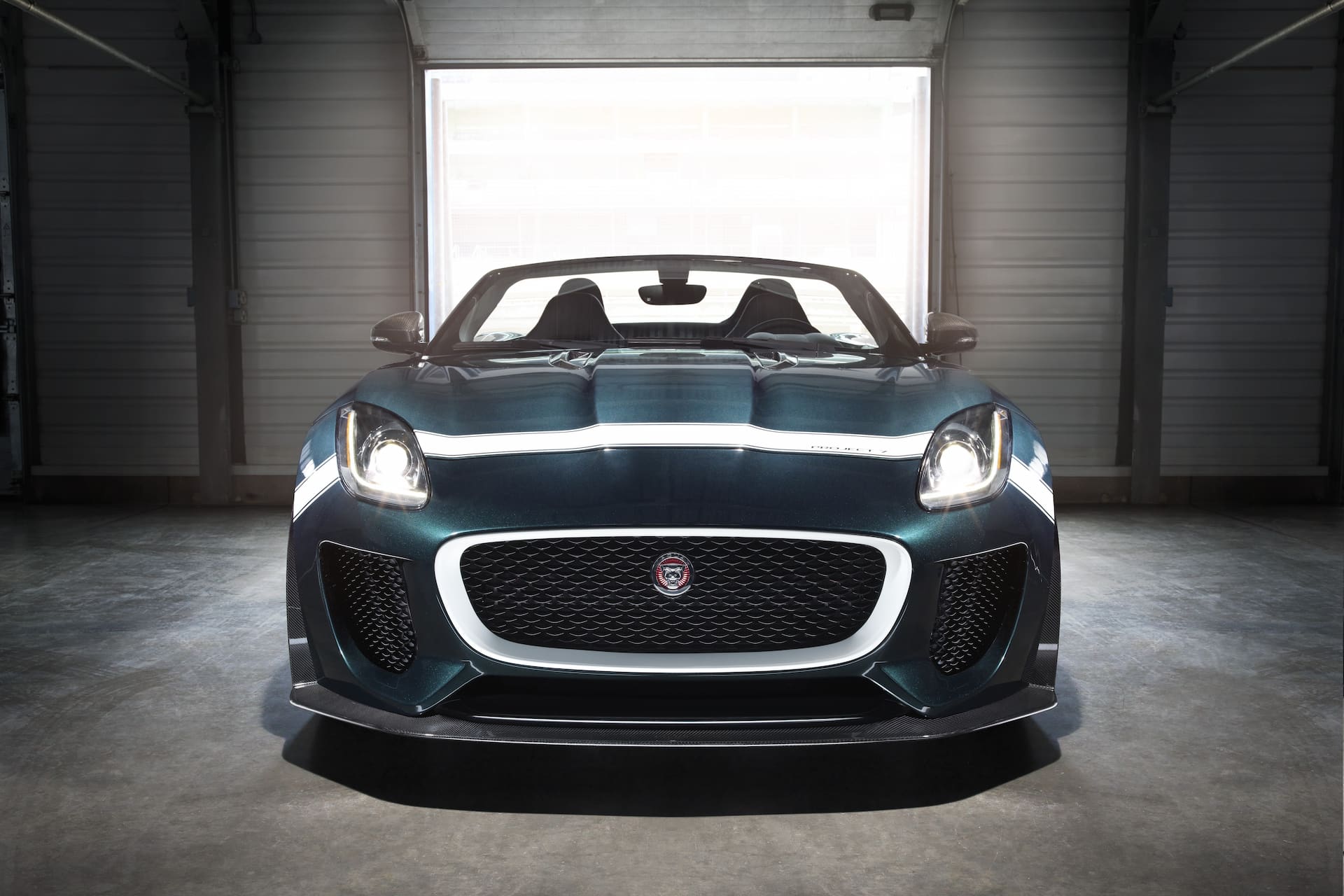
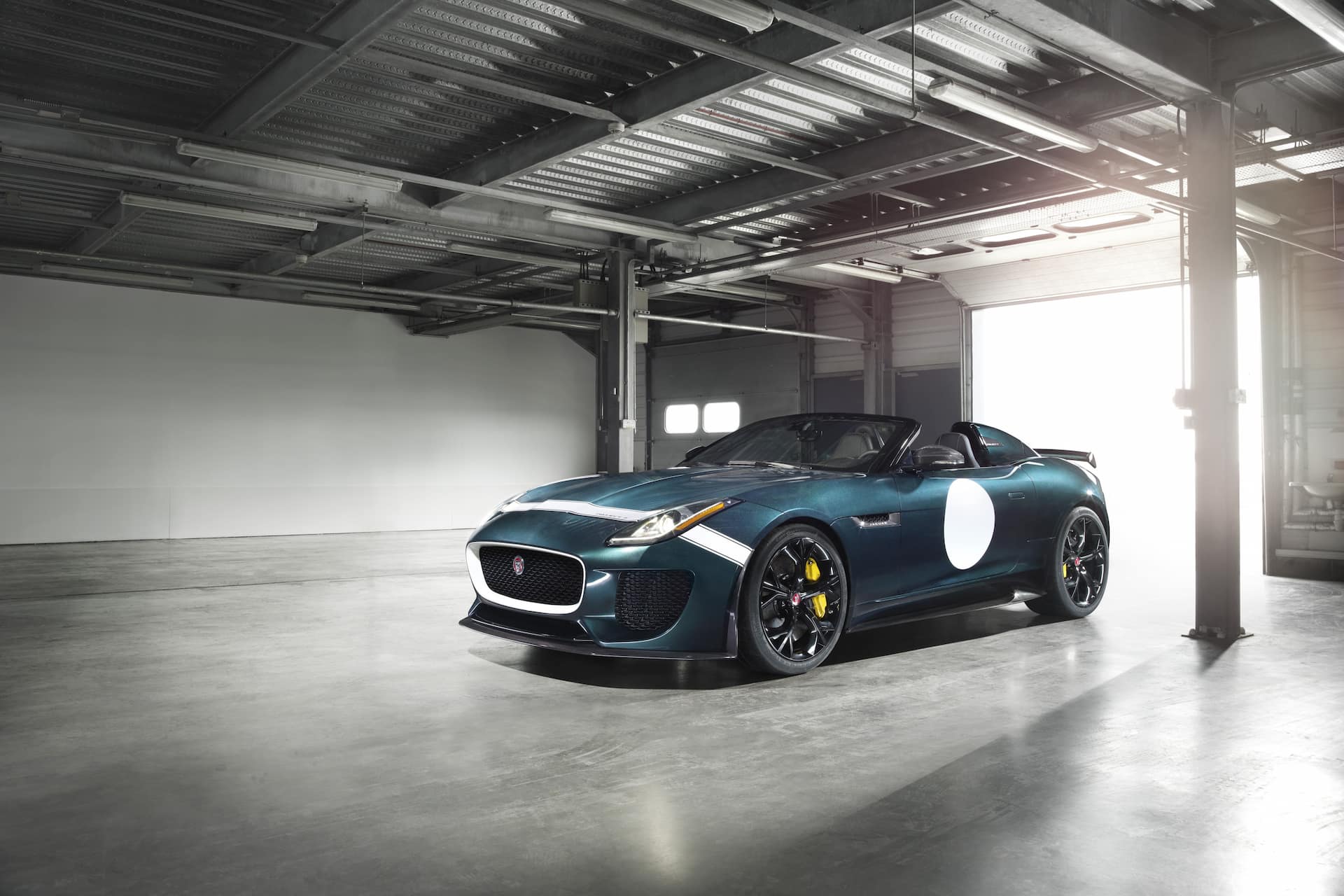
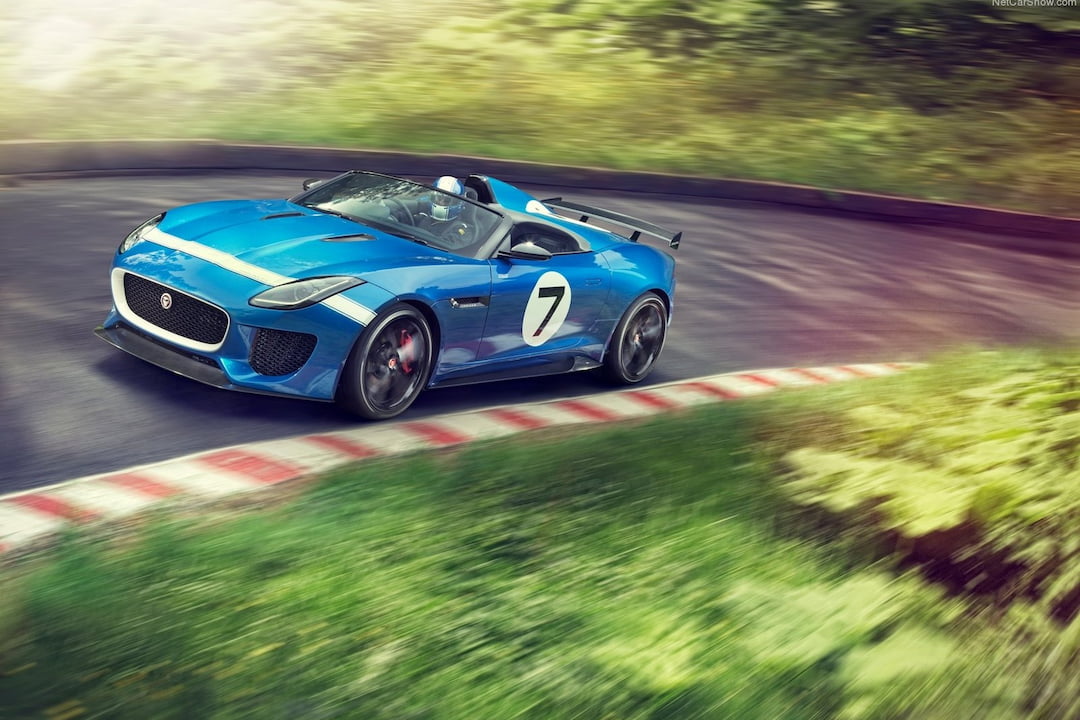
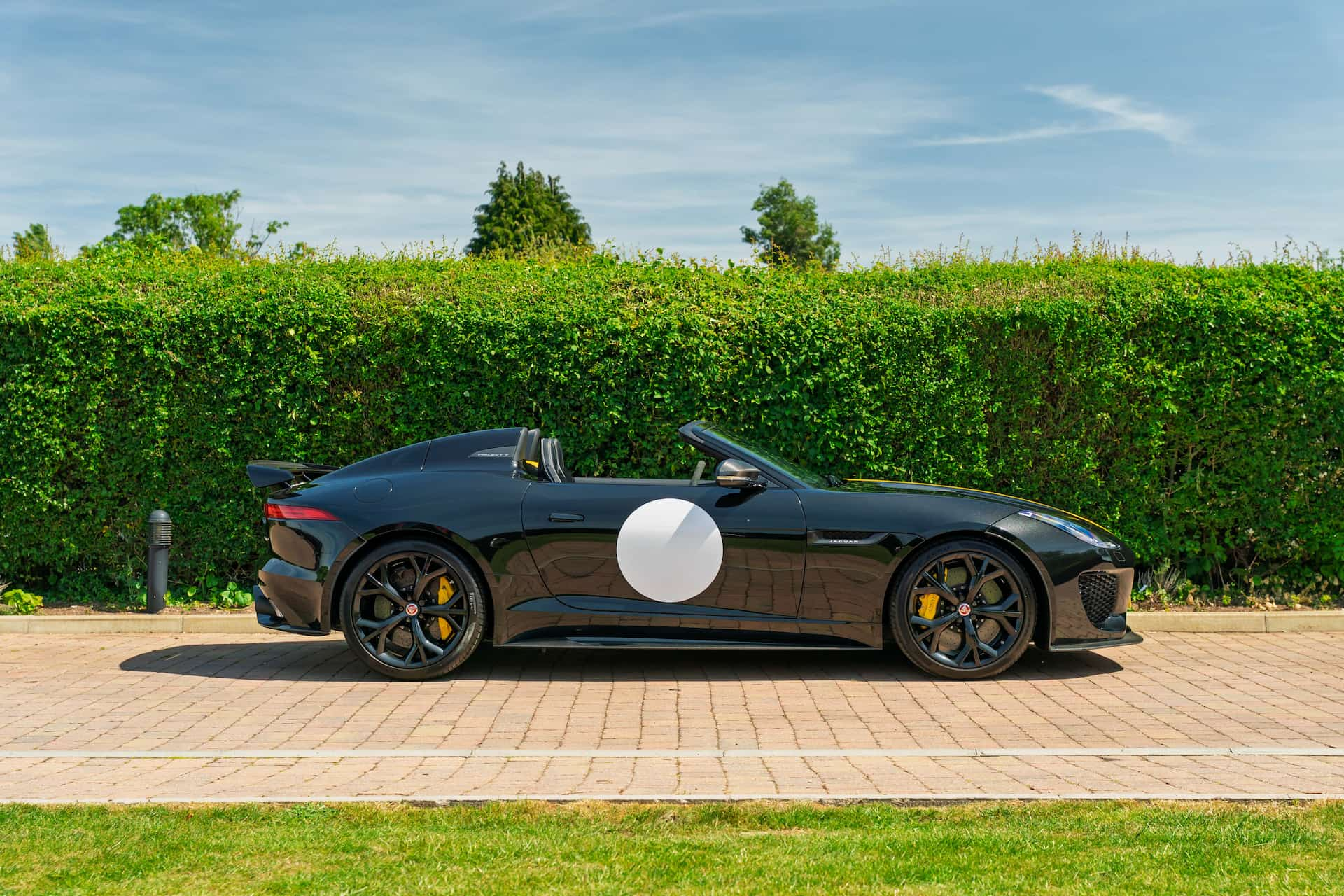
The remarkable thing about the Jaguar F-Type Project 7 is how much of the original idea reached the road. A low windscreen, a single fairing sweeping back from the driver’s head, racing roundels and a conspicuous lack of conventional roof: it had the confidence of a concept car. Somehow, 250 customers were allowed to take one home.
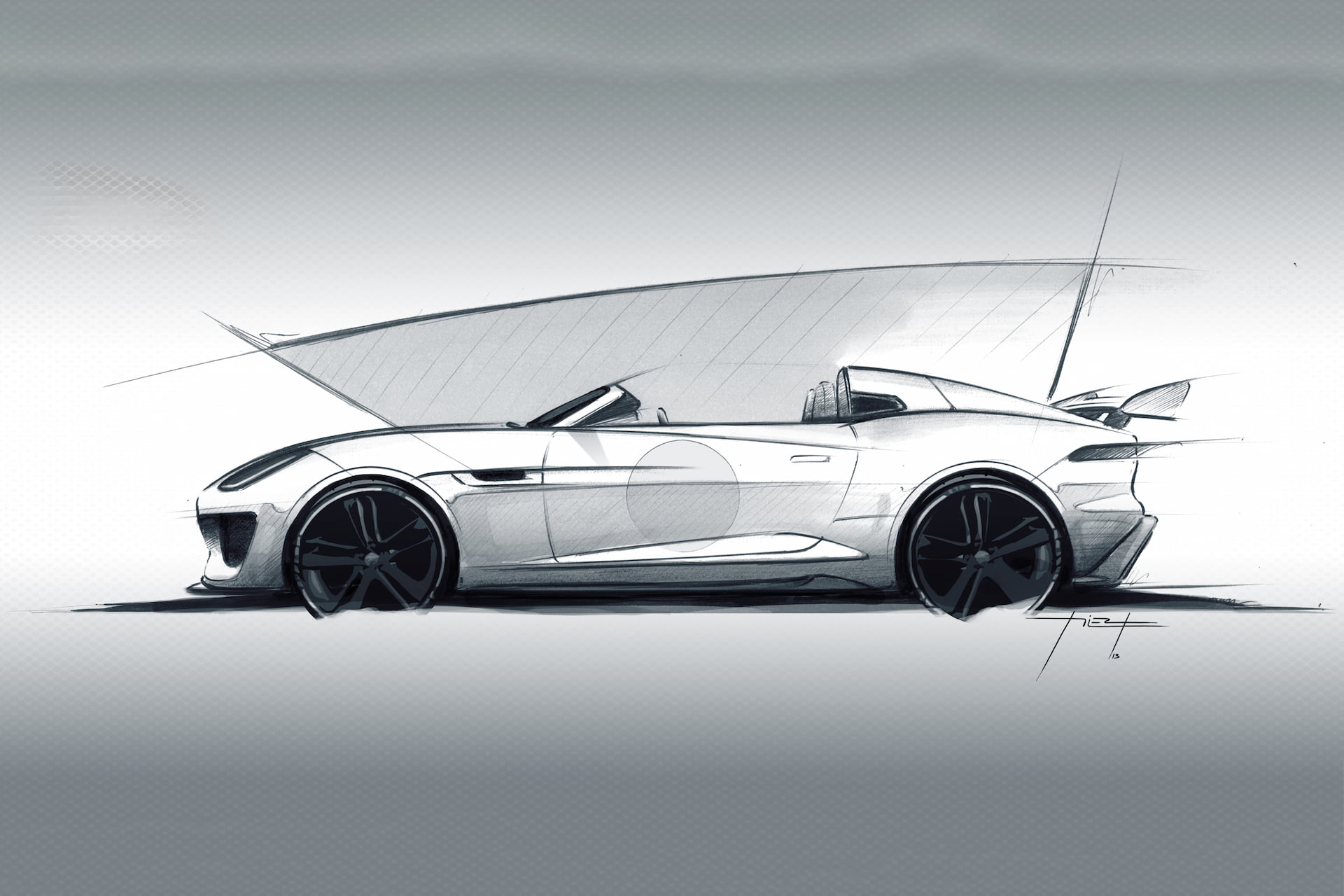
It began with César Pieri. The Brazilian-born designer sketched a more single-minded F-Type in his spare time, drawing on the D-Type rather than simply revisiting the E-Type. Jaguar design director Ian Callum saw the potential and encouraged Pieri and chief designer Alister Whelan to develop it. Digital modelling and clay followed; within four months, the idea was a running car.
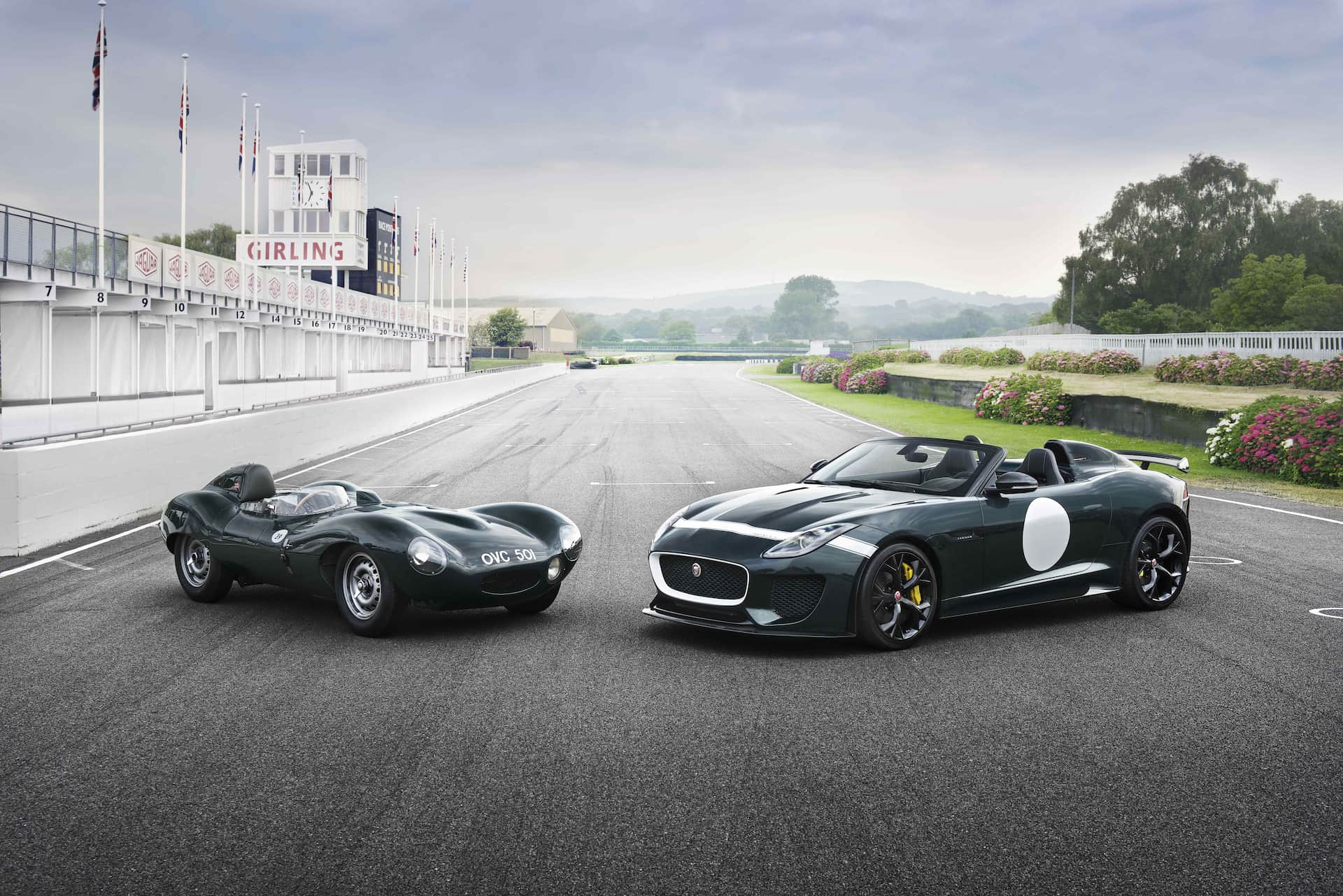
At Goodwood in July 2013, Jaguar’s vehicle integrity chief Mike Cross drove the blue, single-seat Project 7 up the hill. Its supercharged V8 produced 550PS, and the passenger seat had made way for a helmet holder. The name celebrated Jaguar’s seven outright Le Mans victories; the blue recalled the D-Types that won in 1956 and 1957. It was an unusually convincing way to connect Jaguar’s new sports car with its racing past.
The timing mattered. Jaguar Land Rover was assembling a new operation for cars that could sit beyond its normal model ranges. Announced in June 2014, Special Operations was led by John Edwards, with Paul Newsome, recruited from Williams Advanced Engineering, heading Special Vehicle Operations. Its remit covered performance cars, bespoke commissions and limited collector editions, alongside a wider business embracing heritage and personalisation. Project 7 became its first Jaguar performance vehicle.
Harry Metcalfe brought the perspective of someone who might actually buy and use such a car. The evo founder was working as a consultant to Special Operations, and in a contemporary PistonHeads interview he stressed how important it was for Project 7 to establish the new division’s credentials. He had already ordered his own. His enthusiasm centred on its usability as much as its performance: a front-engined roadster with luggage space, capable of a proper European trip.
Jaguar confirmed production in June 2014, returning to Goodwood with a two-seat version a year after the original appeared. Demonstration laps at Le Mans Classic followed in July, alongside the first D-Type. The anniversary was well chosen: Jaguar’s celebrated racer was turning 60.
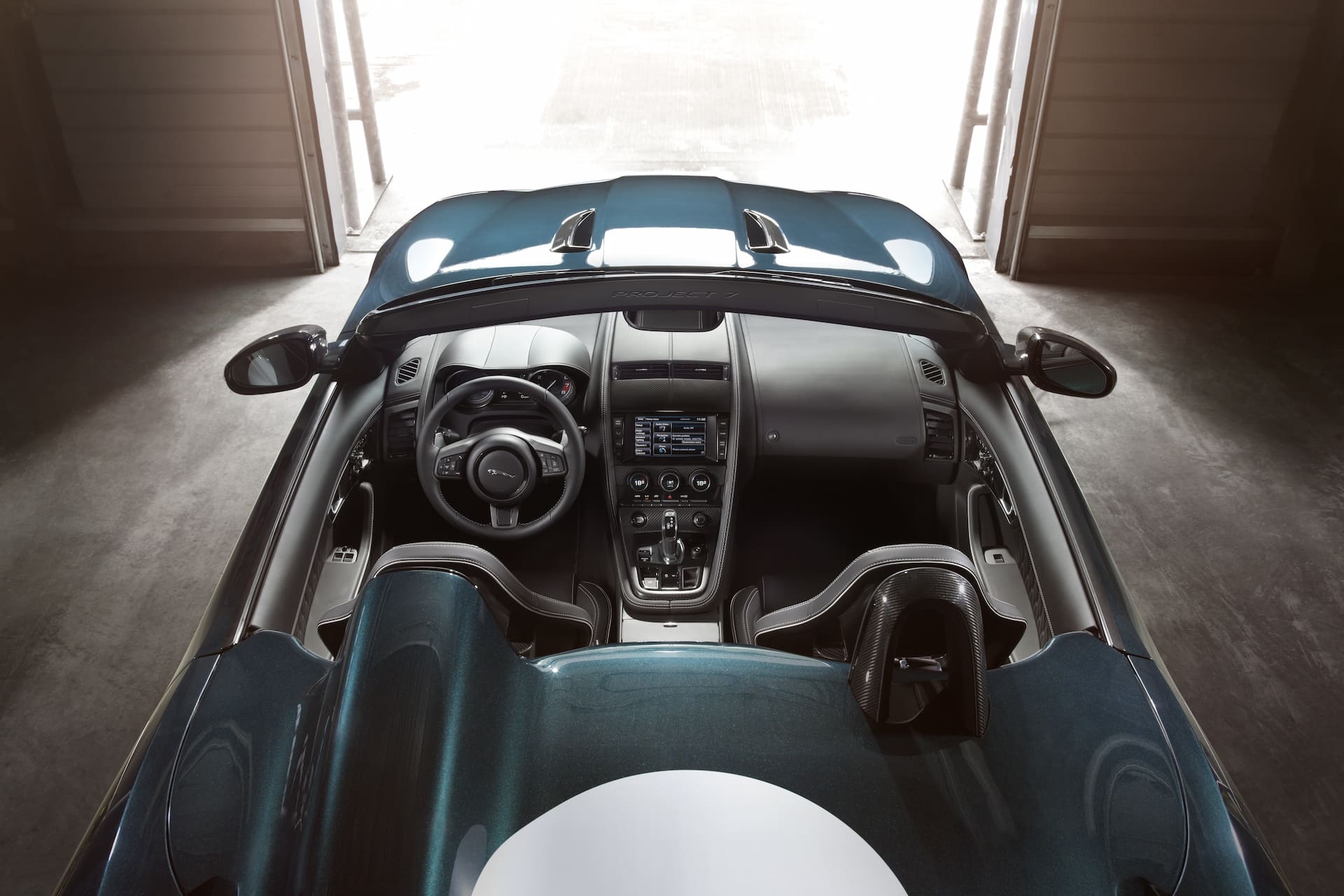
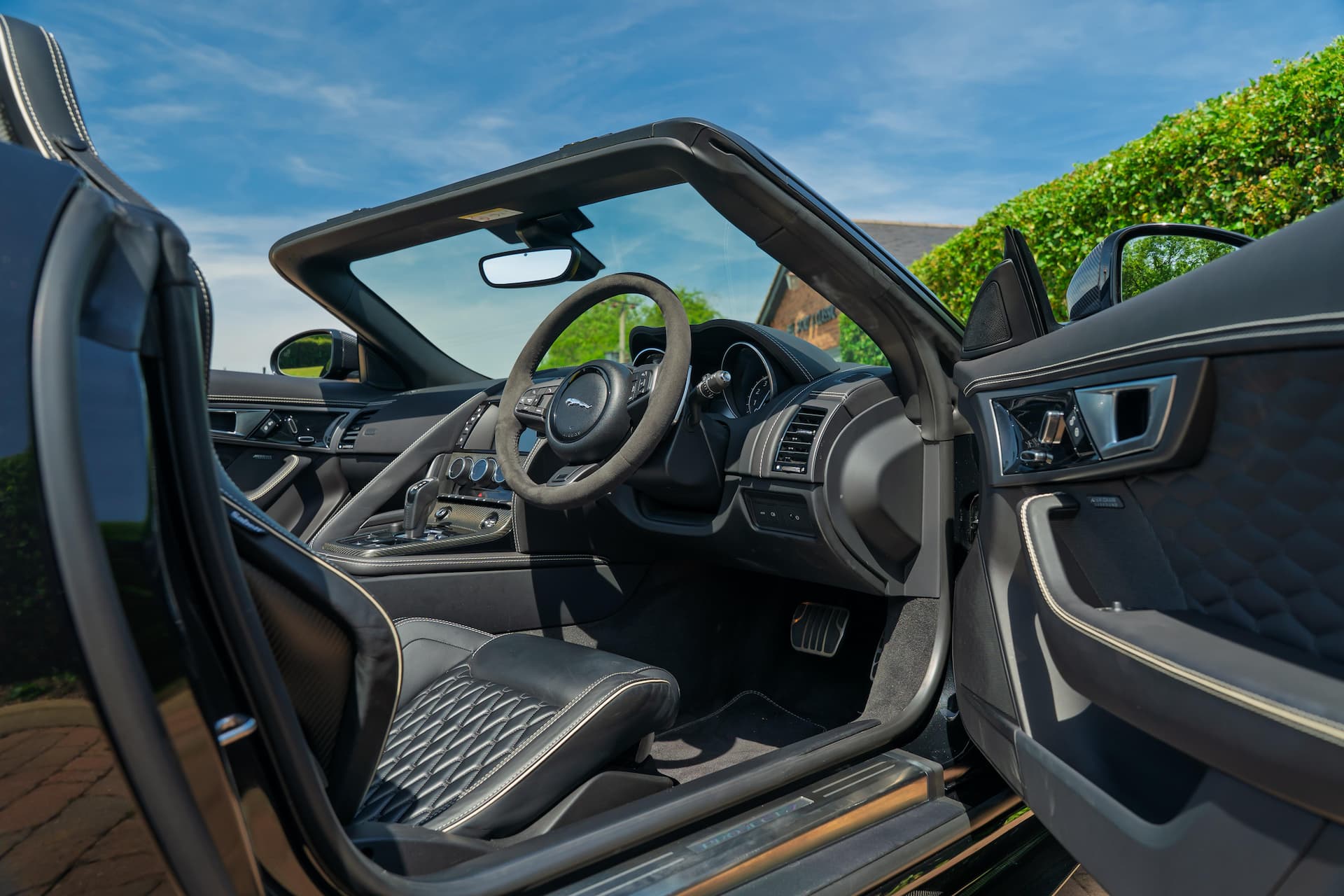
Making the design work for customers required considerably more than fitting a second seat. Both occupants needed rollover protection. The shortened windscreen needed matching side glass, and the car needed some defence against the weather. Jaguar developed a folding Bimini roof that stowed in the boot, leaving a useful 196 litres of luggage space. Lightweight, diamond-quilted Sabelt seats helped maintain the special character inside. The roof demanded a little patience; air conditioning and familiar F-Type controls made the rest of the car considerably easier to live with.
Homologation also produced a distinction worth knowing today. US-specification cars retained a full-height windscreen, as Jaguar’s American launch material explicitly confirmed. The familiar low-screen silhouette therefore does not apply to every Project 7. Market specification matters when comparing individual cars.
Under the bonnet, the 5.0-litre supercharged V8 was developed to 575PS, or approximately 567bhp, making Project 7 Jaguar’s most powerful production road car at launch. Drive went to the rear wheels through a specially calibrated eight-speed Quickshift automatic and electronic active differential. Jaguar quoted 0-60mph in 3.8 seconds and an electronically limited 186mph. Carbon-ceramic brakes were standard, with 398mm front discs and six-piston calipers. Opening the active exhaust gave the figures an appropriately unruly soundtrack.
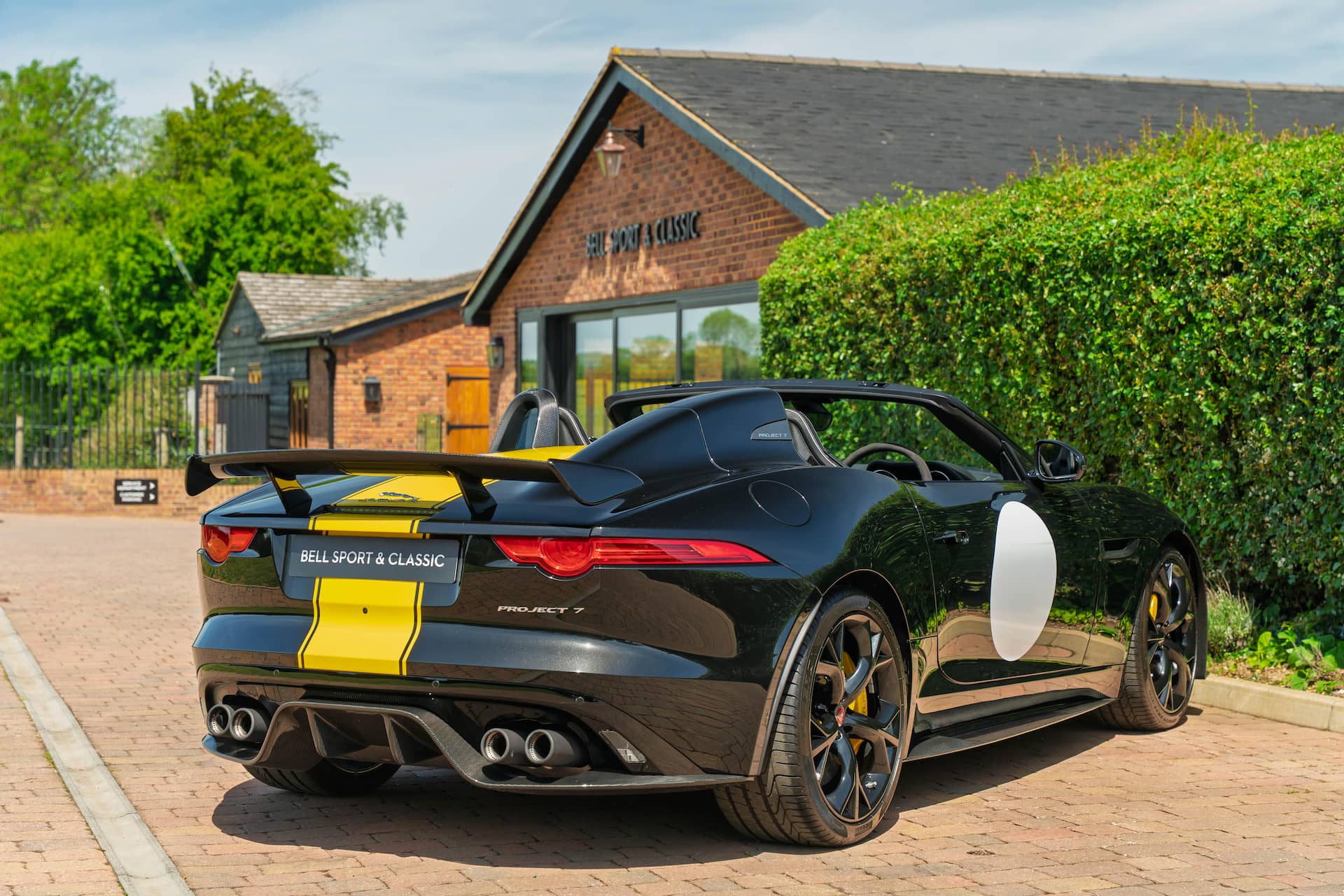
The harder work lay in the chassis. New front suspension knuckles increased negative camber, while revised springs, anti-roll bars and adaptive-damper settings changed the way the car responded. Newsome explained the development problem to Autocar: a powerful, short-wheelbase car with a limited-slip differential and a stiffer front end could push wide in corners and struggle for traction at the inside rear wheel. More front camber and carefully calibrated brake-based torque vectoring helped it turn, while the aerodynamic balance needed similar attention. The splitter, skirts and rear wing had to work together. Preserving natural responses was part of the job.
That engineering gave Project 7 greater agility without removing the F-Type’s exuberance. It also left room for disagreement. Autocar’s 2015 launch drive praised the additional precision and braking performance; evo’s later assessment admired its balance, noise and surprisingly accommodating road manners, while questioning the steering feedback and ultimate track focus. There was substantial ability beneath the theatre, although anyone expecting a Jaguar equivalent of a 911 GT3 could reasonably want more.
Production followed a deliberately small-scale route. Cars began life at Castle Bromwich before transferring to SVO at Ryton, near Coventry, for completion by hand. The run was limited to 250 worldwide; by the 2015 launch, Autocar reported that 80 were going to British buyers. At around £135,000, it was a serious premium over a normal F-Type, yet demand absorbed the allocation before customers had experienced the finished car.
Delivery was less instantaneous than the early excitement. Jaguar had targeted mid-2015, and customer cars reached owners across 2015 and 2016. Period North American owners recorded revised autumn delivery dates, while surviving UK documentation includes cars first registered in early 2016. That distinction matters: the 2013 concept, 2014 production announcement and subsequent customer deliveries are separate stages of the story.
A decade later, Project 7 has acquired a clearer place in Jaguar’s history. In its 2025 retrospective, evo treated it as a defining car of the marque’s outgoing era and recognised that collectors were its natural audience. Metcalfe’s own example has also appeared among the cars selected for Heveningham Concours. The interest extends beyond the novelty of a roofless F-Type.
Its appeal is easy to understand. The production run is genuinely small, the body is immediately recognisable, and the connection to SVO’s beginnings gives it historical substance. Later F-Types could match its power, but they could not repeat its origin story. For a collector, the combination of distinctive design, documented development and usable performance makes a stronger case than another fraction of a second in an acceleration test.
Values deserve the same clear-eyed treatment as the car. Recorded UK auction sales include £137,250 for a 71-mile example in February 2024 and £107,200 for a 1,186-mile car in May 2025. Those are individual transactions, rather than a universal valuation, but they show why rarity should not be confused with guaranteed appreciation. Project 7’s strongest argument remains the car itself.
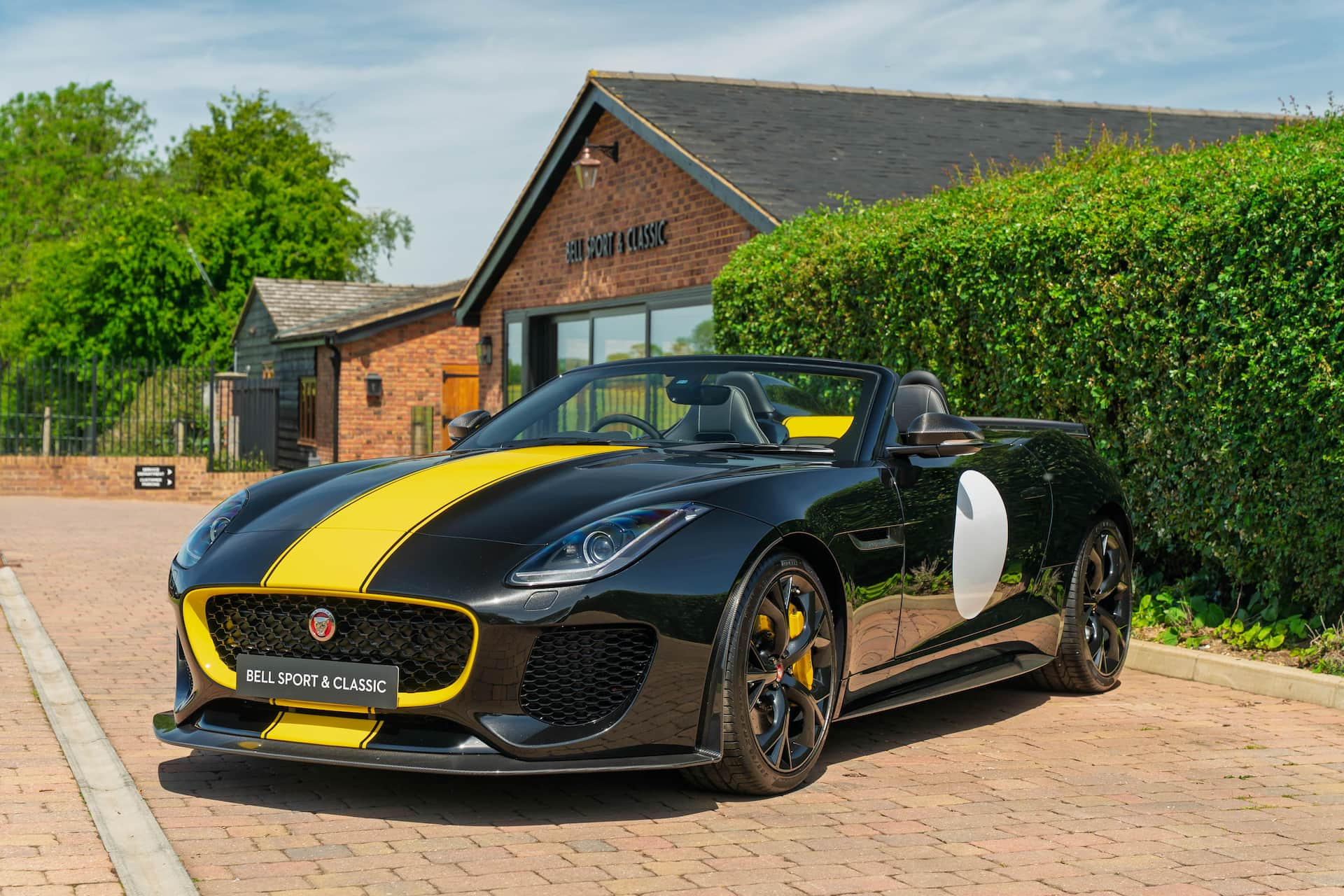
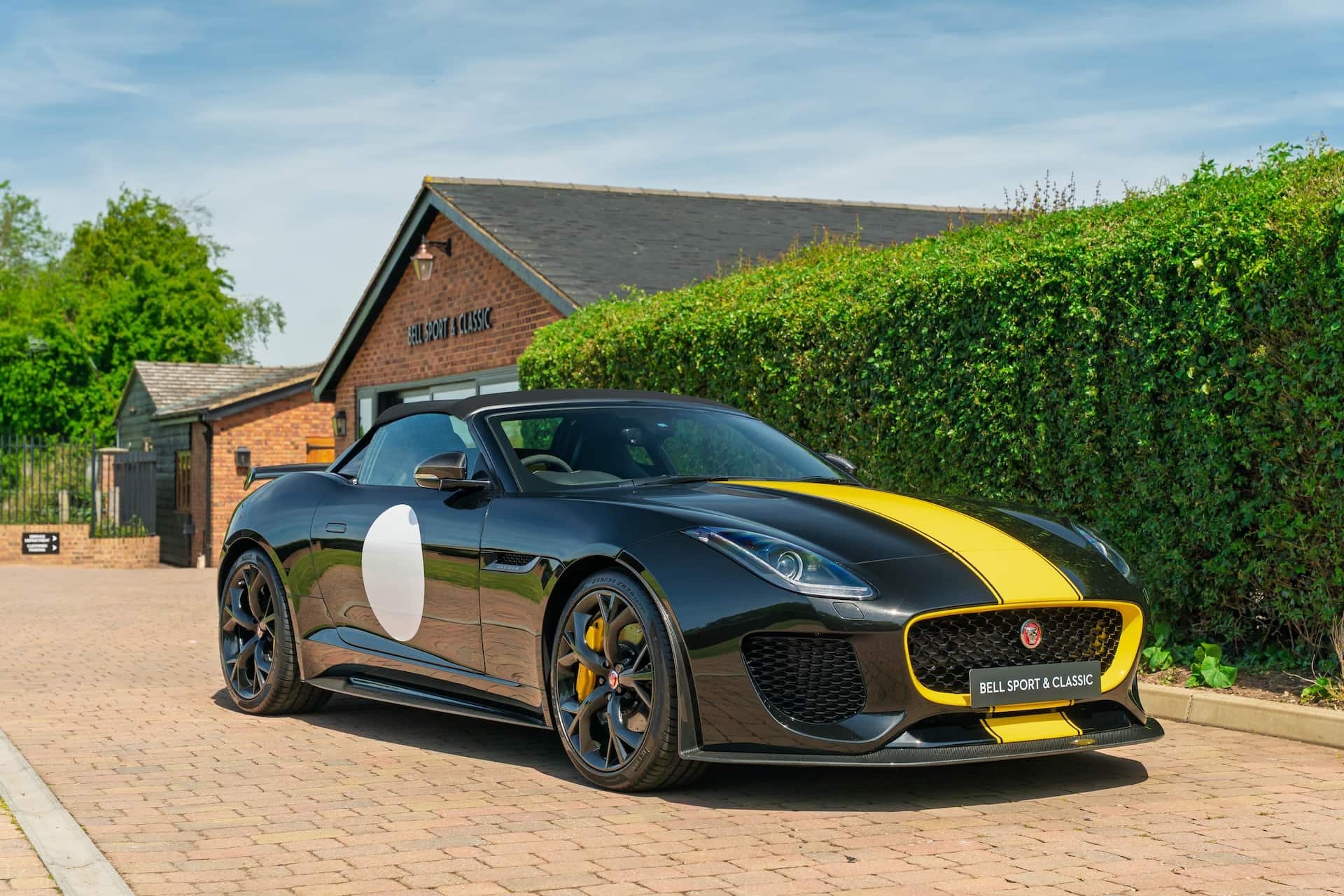
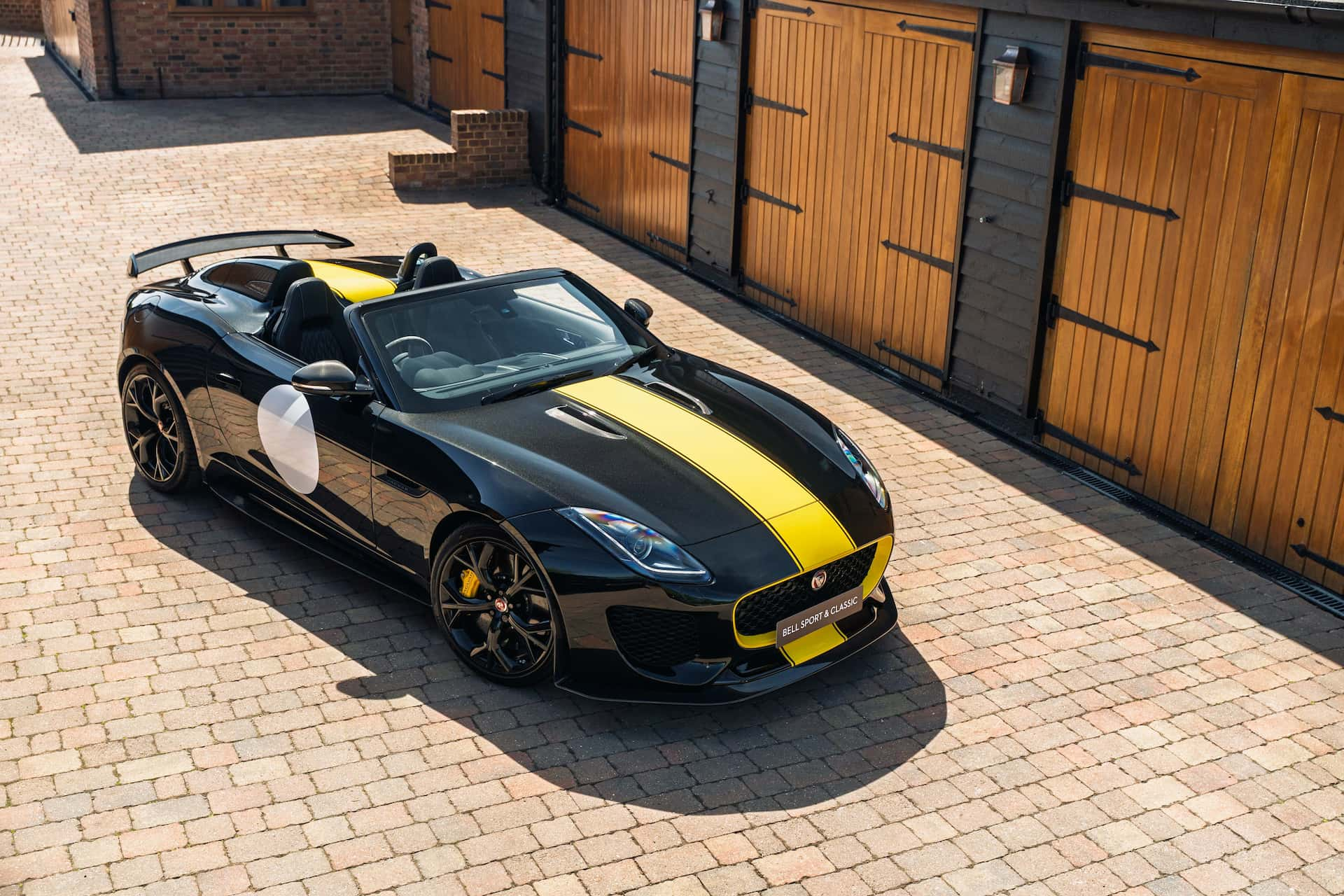
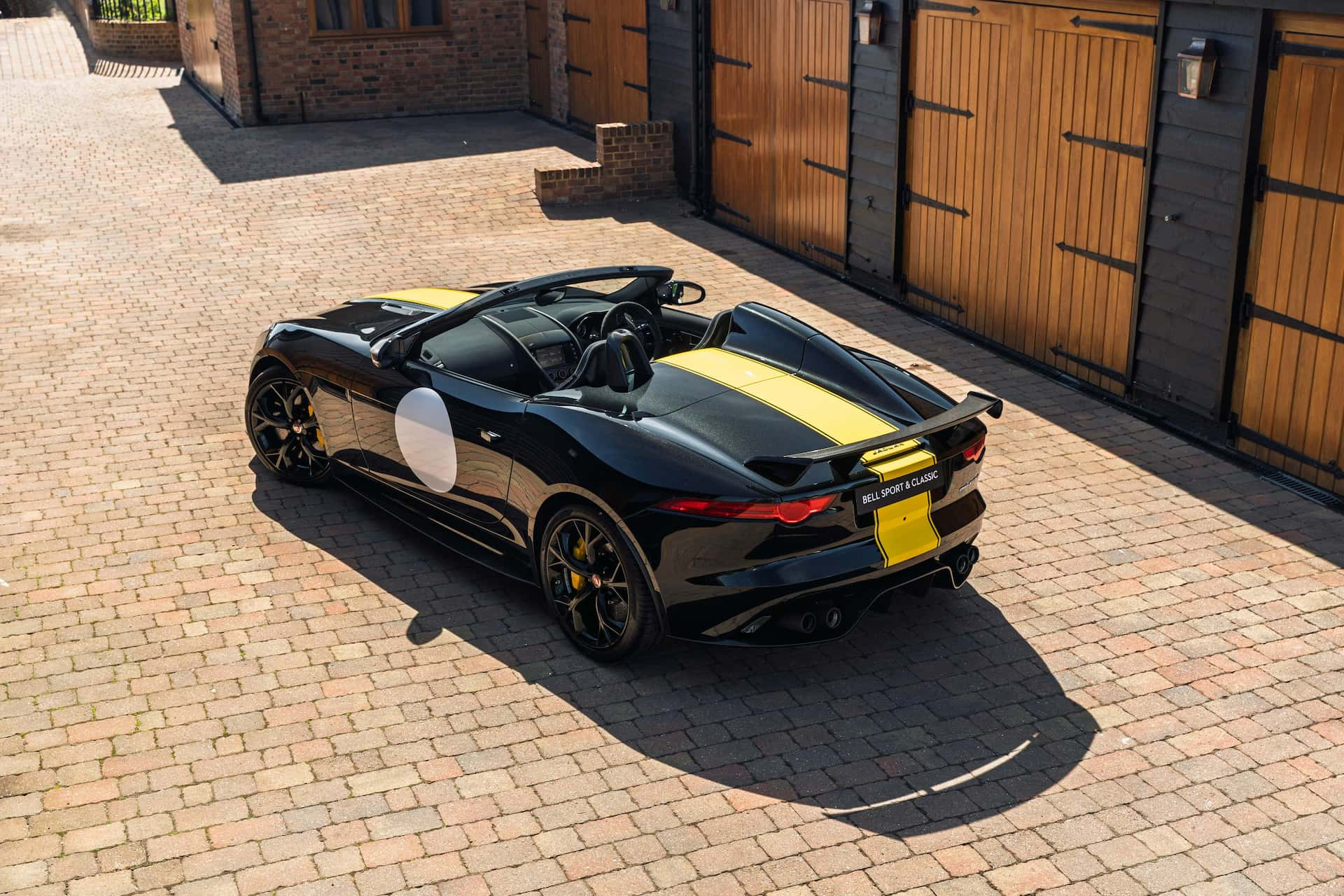
The 2015 Project 7 currently offered by Bell Sport & Classic brings that opportunity into sharp focus. Finished in Ultimate Black with black leather, yellow racing graphics and an Alcantara steering wheel, it has covered just 373 miles and is accompanied by Jaguar service history. Its cut-down windscreen, lightweight bucket seats and carbon-ceramic brakes bring together the details that make the model special. For a collector looking to secure an exceptionally low-mileage example, this is a compelling way into one of Jaguar’s smallest and most distinctive modern production runs.
With F-Type production now complete, the Project 7’s place in Jaguar history is becoming easier to judge. It launched SVO’s Jaguar performance story, with a run of just 250 cars that carried an unusually bold design into customer hands. The D-Type connection gives it depth; the supercharged V8, rear-wheel drive and unmistakable silhouette give it a character of its own. Those qualities underpin a persuasive case for the Project 7 as one of the defining collector Jaguars of its generation. For a buyer taking a longer view, an example with just 373 miles offers the chance to secure that significance while the car’s standing as a modern classic is still taking shape.